
Transient observation
The (Humongous) Tiny Dot: Catching SN 2026aaiv in NGC 7331
Five nights of backyard observations became a time-separated record of a Type Ia supernova whose light crossed roughly 45 million light-years before reaching Earth.
A long time ago, in a galaxy far away, a star exploded.
For a brief time, that single event released enough light to rival a galaxy. Then its photons began a journey across intergalactic space. They traveled for roughly 45 million years—leaving NGC 7331 long before humans existed—before reaching a small telescope in my New Jersey backyard.
The tiny new point in these images is SN 2026aaiv, a Type Ia supernova. The Transient Name Server records its discovery by ATLAS on September 1, 2026, at right ascension 22h 37m 05.618s and declination +34° 24′ 35.37″. Follow-up observations soon showed it brightening enough to become accessible to modest amateur equipment.
Luckily, this specific, tiny patch of the night sky was already on my radar. I had capturing light from this region a few times over the last few months- so, it turns out I already had the data to produce something exciting: a before and after image of the supernova erupting. What makes the observation special to me is not only that I photographed the supernova. By coincidence, I had photographed the same galaxy on two earlier nights. I had the photons from before its light reached us.
The galaxy behind the event
NGC 7331, also cataloged as Caldwell 30, is a large spiral galaxy in Pegasus. ESA/Hubble places it about 45 million light-years away and notes that its size, mass, spiral structure, and rate of star formation make it an intriguing—though unbarred—comparison with the Milky Way.
Several smaller galaxies crowd the same field. The name Deer Lick Group makes them sound like close companions, but the grouping is largely a line-of-sight illusion. NASA’s Astronomy Picture of the Day describes the prominent small galaxies as roughly ten times farther away than NGC 7331. The nearby-looking arrangement is chance projection, with faint Milky Way dust and foreground stars adding still more depth.
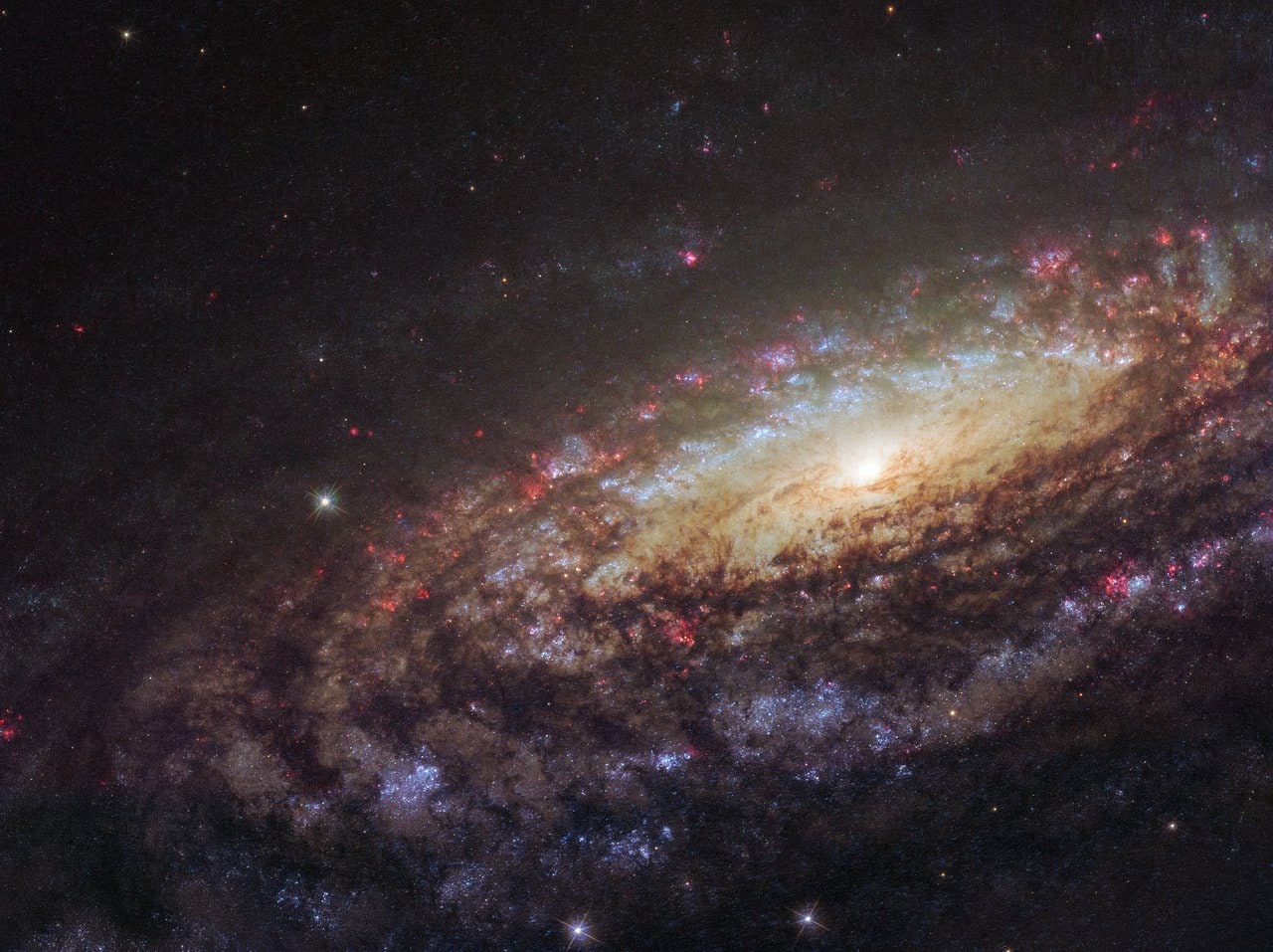
As a reminder, practically every star seen in this image, apart from one very special one, is a star from our own galaxy.
This frame also captures a group of galaxies known as Stephans Quintet; a dynamic, visual arrangement of 5 galaxies, some of them gravitationally interacting. This was actually the region that drew me to this patch of the sky; I ultimately am planning on doing a much more detailed deep dive into this area, but given their distance, my equipment isn’t quite up to the challenge just yet.
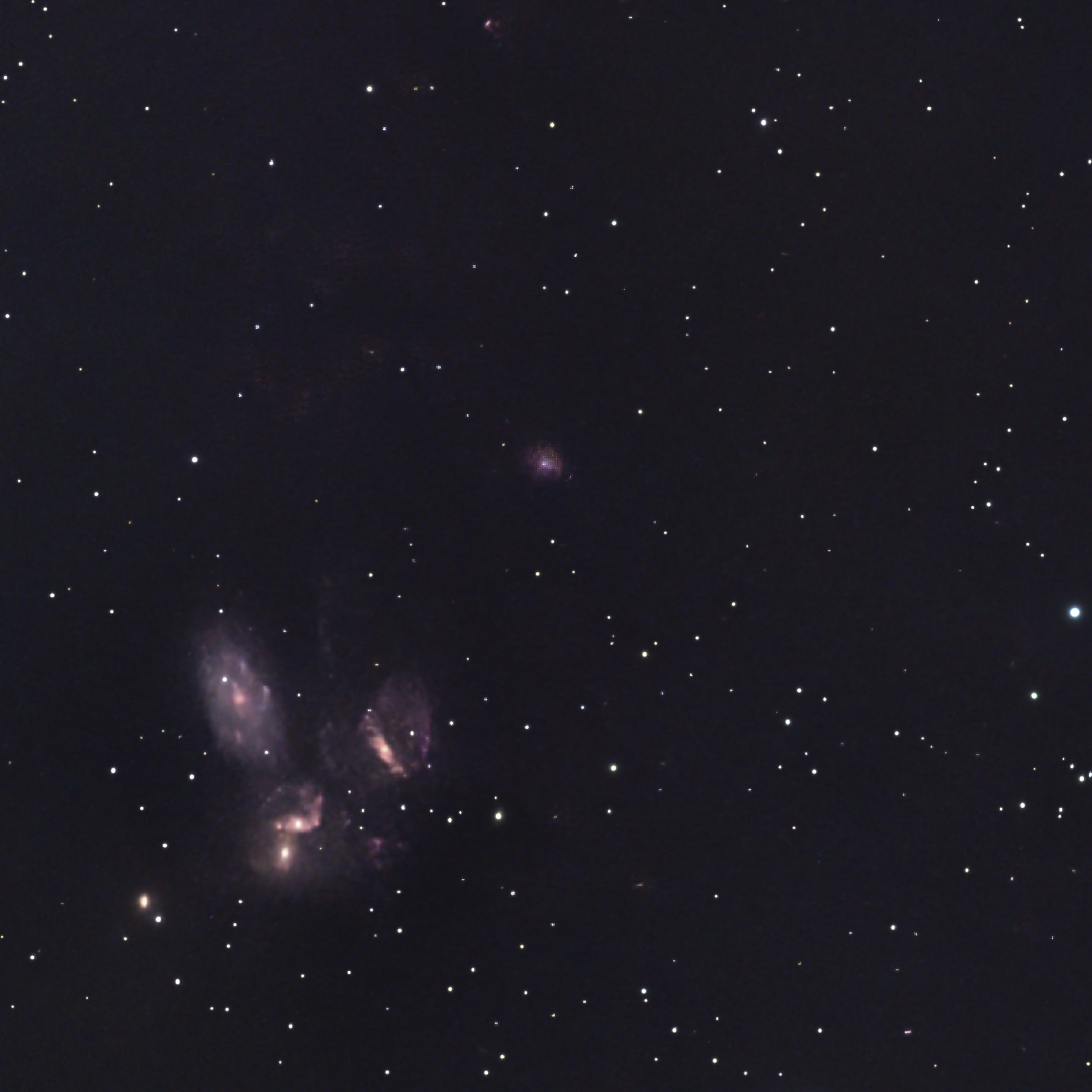
My initial sessions in this area were for survey purposes; I was evaluating how effectively i could image the quintet with my gear, and how well it responded to additional integration time. Once I heard about SN 2026aaiv, though, I realized the opportunity I had.
What a Type Ia supernova means
A Type Ia supernova is a thermonuclear disruption involving a white dwarf: the dense remnant of a Sun-like star. The exact route is not always the same. In one family of scenarios, the white dwarf draws material from a companion; in another, two white dwarfs merge. Either route can drive unstable nuclear burning that destroys the white dwarf. NASA summarizes both pathways and explains why the broadly similar luminosities of Type Ia events make them important tools for measuring cosmic distances.
That is different from a core-collapse supernova, in which a massive star’s core collapses and may leave a neutron star or black hole.
The point beside NGC 7331 looks no more remarkable than a foreground star. But most of the distinct stars scattered across this field are in our own Milky Way. SN 2026aaiv is inside the distant galaxy behind them. We are seeing the destruction of a star from roughly 45 million light-years away.
Turning five nights into a comparison
The complete dataset contains 1,002 retained frames and 23,200 seconds of integration—6 hours, 26 minutes, and 40 seconds. It spans five observing nights, grouped into two processing eras:
| Processing era | Dates | Retained frames | Integrated exposure |
|---|---|---|---|
| Historical | July 20 and August 10 | 464 | 1h 57m 40s |
| Recent | September 5–7 | 538 | 4h 29m |
| Combined master | All five nights | 1,002 | 6h 26m 40s |
The obvious approach would be to process an old stack and a new stack independently. But almost any visible difference could then come from unequal exposure, gradients, seeing, color calibration, noise reduction, stretching, or framing—not the supernova.
Instead, I registered the historical and recent stacks to a shared geometry, cropped them to the same 3,171 × 1,784 field, and combined all five nights into one deep master. That master supplied a single developed, starless galaxy background. I then separated and recombined the point-source layers so the galaxy itself remained fixed while the stellar component changed. For the final interactive comparison, I made matching 967 × 967 crops centered on NGC 7331.
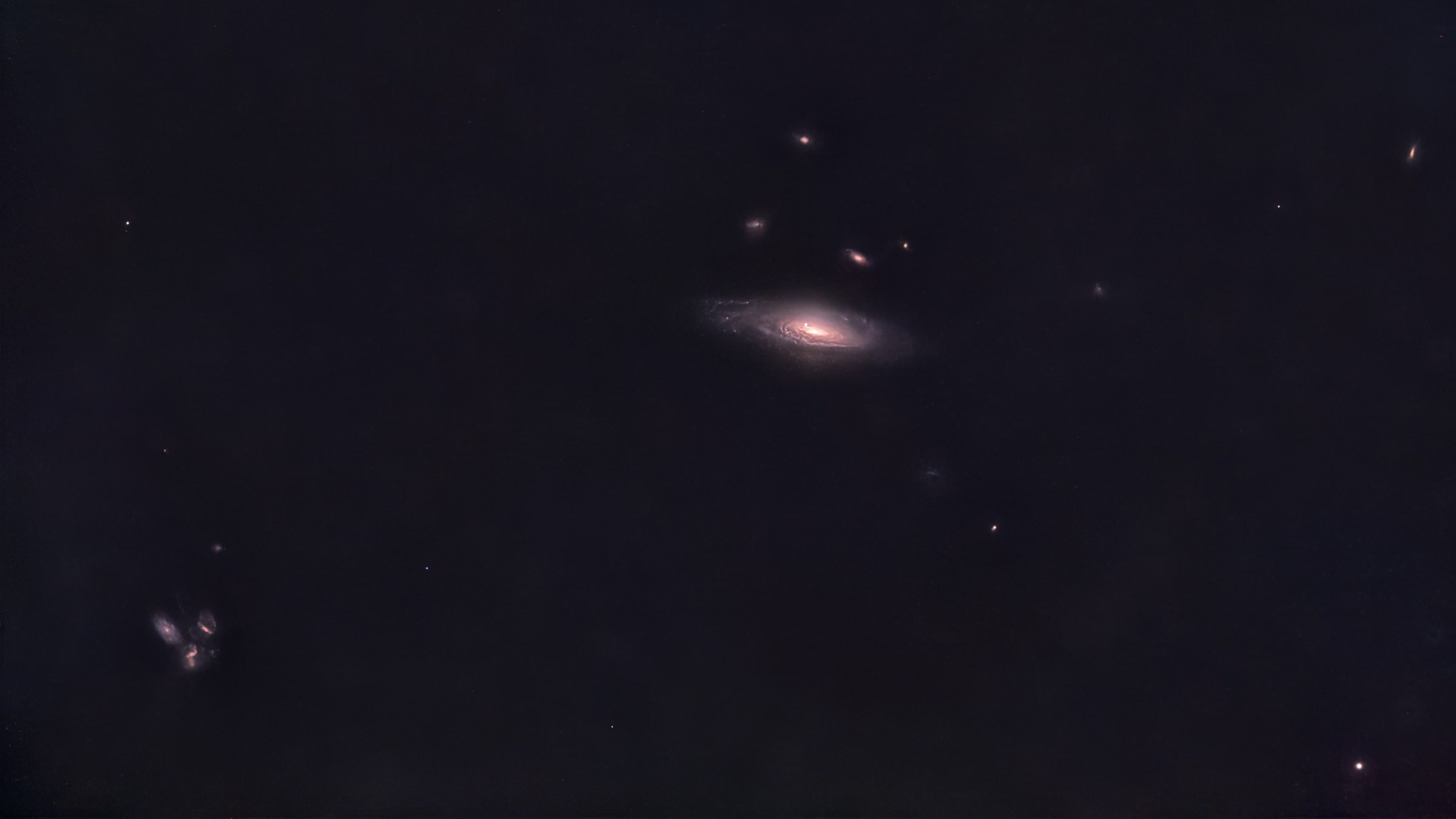
This does not turn the image into a laboratory measurement. It does make the visual question much cleaner: what changed in the point-source layer while the galaxy stayed still?
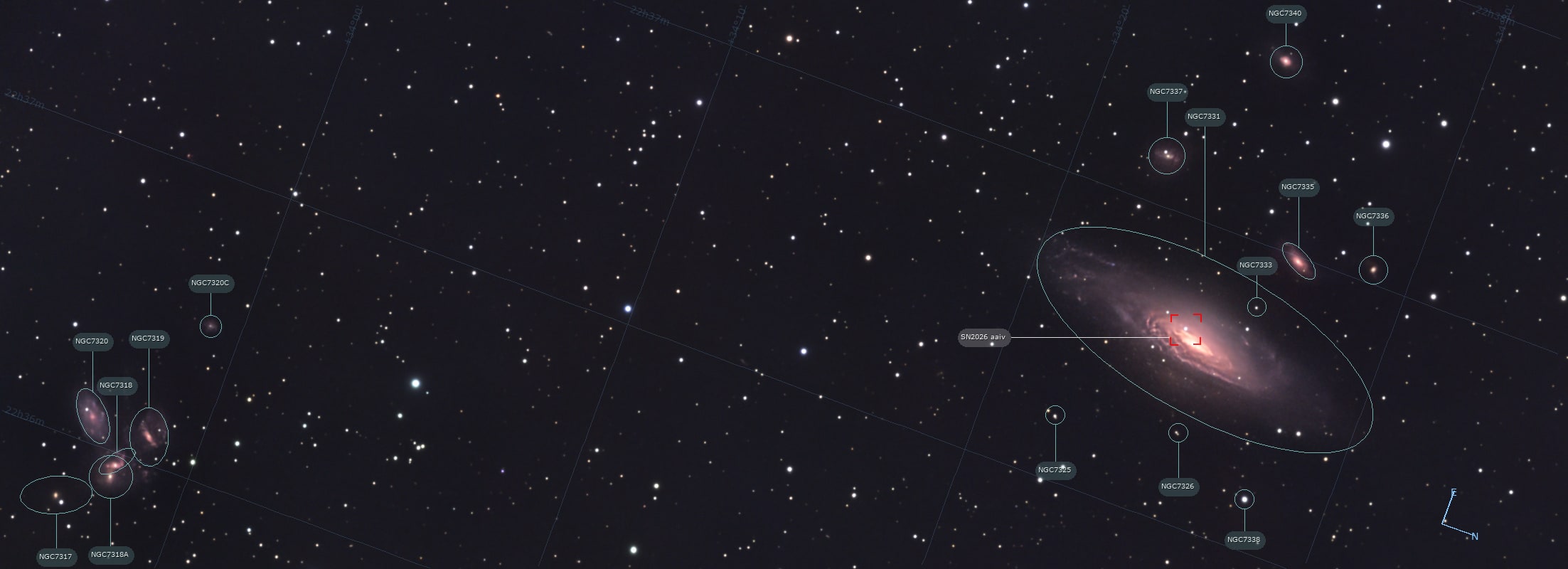
Isolating the tiny dot
The before/after pair still contains hundreds of ordinary stars. Small differences in registration, color, point-spread shape, and brightness leave noisy residuals when two star fields are directly subtracted.
To suppress those common sources, I built a separate PixelMath experiment:
iif(recentStars - k * referenceStars > 0, recentStars - k * referenceStars, 0)
With k = 90, most shared stellar structure was driven below zero and clipped to black. Raising the black point suppressed the remaining colored specks. The transient survived because its signal was dramatically stronger in the recent layer.
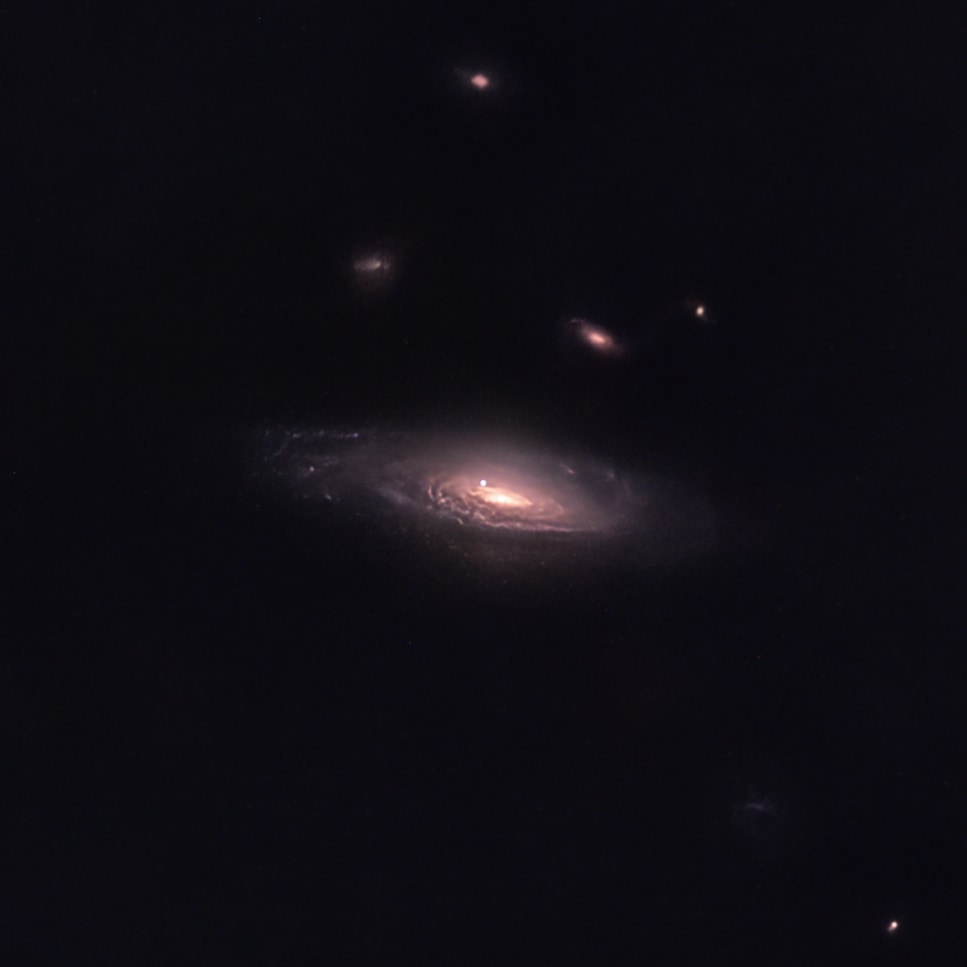
The result is visually persuasive, but it is not calibrated difference photometry. The scale factor was selected for presentation, the inputs were processed star layers, negative values were clipped, and the black point was adjusted. This view answers “where is the most conspicuous new point?” It does not measure the supernova’s flux.
The comparison
The interactive viewer opens with the comparison baseline and the foreground-star-suppressed experiment—the maximum visual contrast. Select After SN in either menu to bring back the complete recent-session presentation.
Comparison
Deer Lick Group
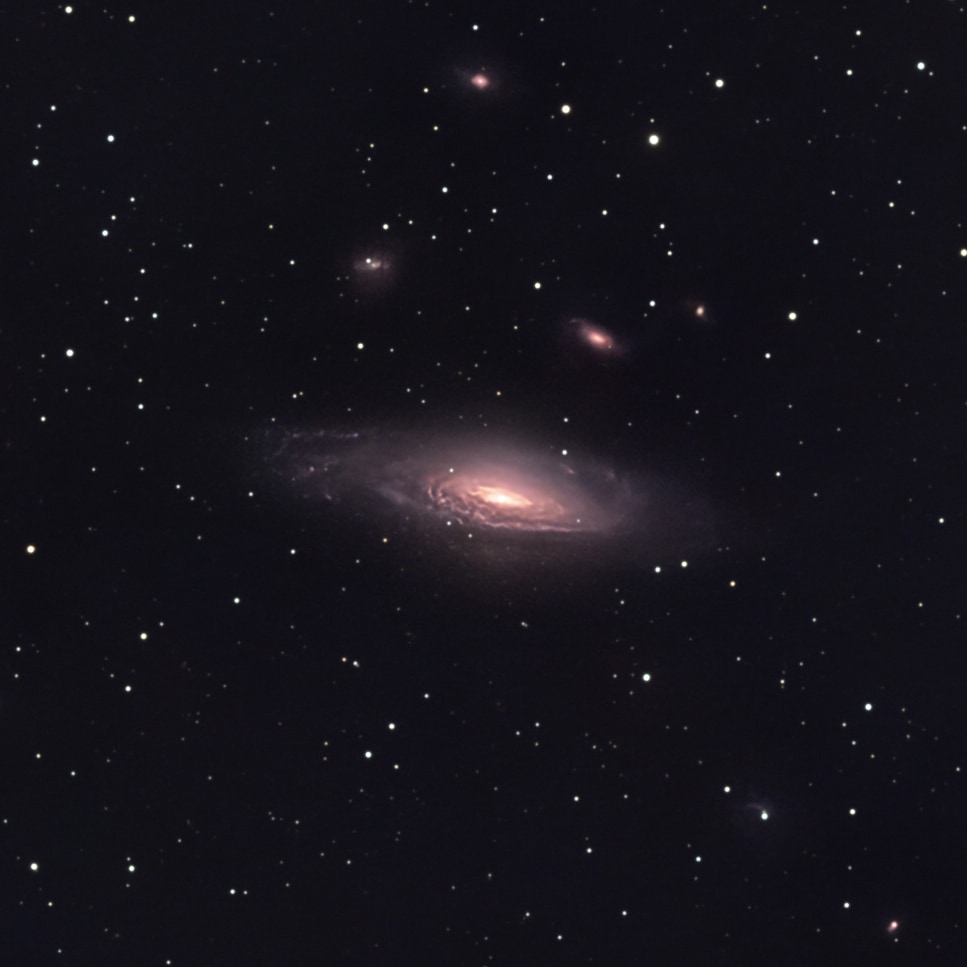
Compare the saved baseline, recent-session presentation, and foreground-star-suppressed experiment.
Reconstructing the edit itself
This project produced another useful artifact: the entire Siril session was reconstructed from its log, Naztronomy stacking presets, saved FITS products, and timestamped snapshots. That record exposes the branches that a simple list of edits would hide—the historical and recent stacks, their registration and common cleanup, star separation, the shared galaxy background, the subtraction experiment, and the four final presentations.
The reconstruction is also candid about uncertainty. Some transitions are directly logged or represented by a saved image; others are inferred from adjacent commands, intermediate names, and snapshots. The companion labels that boundary instead of pretending the log captured every human decision.
When an archive becomes a time machine
Most deep-sky objects appear permanent on human timescales. Nebulae evolve over hundreds of thousands of years. Galaxies turn over hundreds of millions. Two photographs taken weeks apart usually show the same sky, and astrophotographers naturally treat an older session as another hour to add to a stack.
But every exposure contains something besides signal: a time.
My July and August frames recorded the light arriving from NGC 7331 before SN 2026aaiv became visible from Earth. The September frames recorded the field after it did. The explosion itself was not new—it had happened roughly 45 million years earlier—but the information reaching us had changed.
The final difference is almost absurdly small: one point of light that is easy to miss.
For tens of millions of years, those photons were already on their way. I happened to be outside when they arrived. And because I had looked in the same direction a few weeks earlier, I could see the difference.